Showing posts with label follow the green rabbit. Show all posts
Showing posts with label follow the green rabbit. Show all posts
missing looking 1 : taubach
statement about the work on the course wiki
click HERE to see the video in a bit bigger resolution on the vimeo site

fred camper says:
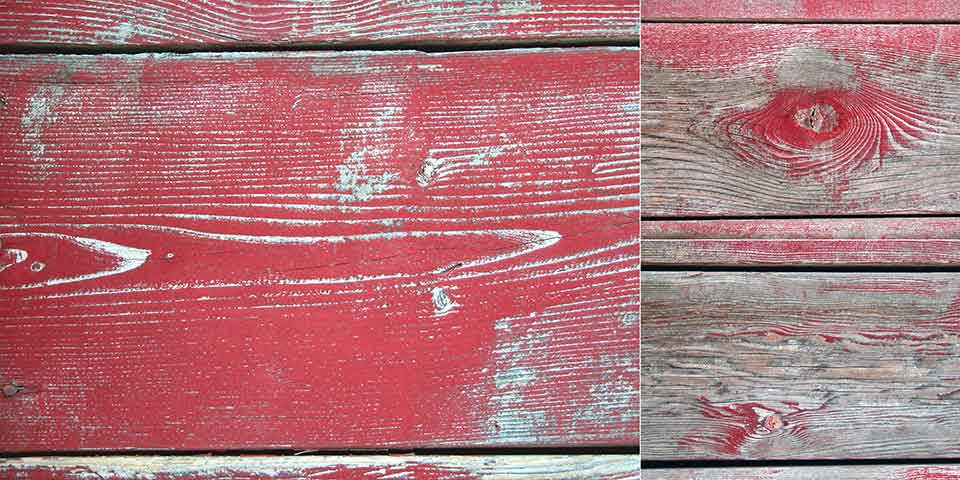 photo: Permutations 2: Berdan Forest, 3.2 by Fred Camper
By combining multiple photos taken from different perspectives, I have been trying to convey an ever-expanding sense of wonder at objects and places and spaces, driven by the self-invented myth that placing images in true and proper orders will help to heal this broken world. In more recent work, I have surrendered some control over imagery and ordering, in the hope of opening my work to the mix of order and chaos that fills the wider universe.
- Fred Camper
Camper lives in Chicago. He's an artist, writer and lecturer, talking about experimental film. he hosts a nice website with Stan Brakhage resources.
storm room : cardiff/miller

Recent installation by Janet Cardiff and George Bures Miller.
Really incredible, they created a storm "outside" of an abandoned dentists office.
See a video of the installation here: link
"A 2.5 minute excerpt from 10 minute art installation by Janet Cardiff and George Bures Miller. A computer controls the flow of water, the lights, the strobes, and the fans, etc. An ambisonic sound track plays through 8 hidden speakers and 2 hidden subwoofers. The piece begins as the storm approaches, with no water hitting the windows, then proceeds to the incredibly loud, floor shaking climax (sorry you can't hear this on Youtube). As the storm dissipates the sound of someone moving and coughing in the next room is heard and then the piece starts again. This work was created in a deserted dentist's office in a traditional Japanese house near the city of Tokamachi, Japan as part the Echigo Tsumari Art Triennial 2009. "
whipping rope
 (This is my rope. It's is a lot bigger than the one in this demo video.)
I'm got a large rope today and the ends were fraying quickly, so I turned to these sailor's tricks and ended up with really secure ends. Let's see how they hold up to the pulling.
maybe I'll try this sometime.
I noticed immediately that it feels really good to do some physical work, even just moving my fingers. The texture of the rope and the small twine felt rough and nice and holding up the tension while whipping the ends really helped my concentration.
basically, I want to be able to film like this, down the rope, so I'm looking at different possible camera mounts I can make.


time : Austerlitz
TIME WAS BY FAR THE MOST ARTIFICIAL OF ALL OUR INVENTIONS, AND IN BEING BOUND TO THE PLANET TURNING ON ITS OWN AXIS WAS NO LESS ARBITRARY THAN WOULD BE, SAY, A CALCULATION BASED ON THE GROWTH OF TREES OR THE DURATION REQUIRED FOR A PIECE OF LIMESTONE TO DISINTEGRATE...
IN ORDER TO RECKON TIME WE HAVE TO DEVISE AN IMAGINARY, AVERAGE SUN...
-austerlitz
IN ORDER TO RECKON TIME WE HAVE TO DEVISE AN IMAGINARY, AVERAGE SUN...
-austerlitz
sound work by Céleste Boursier-Mougenot
Trained as a musician and composer, French artist Céleste Boursier-Mougenot creates works by drawing on the rhythms of daily life to produce sound in unexpected ways. His installation for The Curve will take the form of a walk-though aviary for a flock of zebra finches, furnished with electric guitars and other instruments and objects. As the birds go about their routine activities, perching on or feeding from the various pieces of equipment, they create a captivating, live soundscape.
(from: Barbican website , show coming up 27 February 2010 - 23 May 2010)
moe-joe cell

oh yeah! I almost forgot to make a link to my friend Moshe Daniel's mindblowing fuel-less energy cell... I don't really believe it... except I actually did see it working...
we shared a Dorkbot
http://www.moe-joe-cell.com/
and don't forget to check out Moshe's other 'cosmic' solutions....
dispersion, anatomy, carnivals,
this week I got into reading some articles from the Leonardo Almanac series on dispersive Anatomies:
http://www.leonardo.info/LEA/DispersiveAnatomies/DispersiveAnatomies.html
I read:
Sandy Baldwin, "Introduction: the Anatomy of Dispersion"
Andy Clark, "Dispersed Selves"
Alphonso Lingis, "The Inner Cauldron; the Upward Array"
and will read:
Tom Zummer, "A Cartography of Interstices: Some Annotations Toward the Mapping of Biological-Technological Embodiment"
also, I have been finding great texts on the Monoskop log... currently holding:
- Beller, Jonathan - The Cinematic Mode of Production
- Cubitt, Sean - EcoMedia
- Kirschenbaum Matthew G. - Mechanisms: New Media and the Foresic Imaging
- Zielinski, Siegfried - Audiovisions: Cinema and Television as Entr'acts in History
I'll make some posts about how the reading goes...
http://www.leonardo.info/LEA/DispersiveAnatomies/DispersiveAnatomies.html
I read:
Sandy Baldwin, "Introduction: the Anatomy of Dispersion"
Andy Clark, "Dispersed Selves"
Alphonso Lingis, "The Inner Cauldron; the Upward Array"
and will read:
Tom Zummer, "A Cartography of Interstices: Some Annotations Toward the Mapping of Biological-Technological Embodiment"
also, I have been finding great texts on the Monoskop log... currently holding:
- Beller, Jonathan - The Cinematic Mode of Production
- Cubitt, Sean - EcoMedia
- Kirschenbaum Matthew G. - Mechanisms: New Media and the Foresic Imaging
- Zielinski, Siegfried - Audiovisions: Cinema and Television as Entr'acts in History
I'll make some posts about how the reading goes...
frontier maquette
 field, distance, can't see what lies ahead
 horse walking forwards
 making maquette, tiny wheels
 making maquette, tiny camera wagon
 making maquette, tiny camera, on a tiny hot water bottle, for stability, vibration avoidance
 making maquette, long wagon, weight is in the back and stability is made by just pulling from the front
 Rudy posing for the horse
 fake scenery setup
fake final image!!!
noise structures 1 : pristina

❶ noise structure: pristina
(the project I'm working on in my course Follow the Green Rabbit)
at this stage I will just go and make a long recording (number of days) and later decide on the translation/presentation format.
✖ Briefly, the context...
In Kosova, the electricity and water systems are not currently sufficient to service the entire country 24 hours a day. Following a number of visits to Pristina, a surprisingly modern place, with excellent coffee shops, fine dining, a few radio and television stations, large office building and nightclubs, I remarked a continuous cycle of noise in the city. The electricity and water is generally functioning on a cycle of '2 hours on, 1 hour off' during the day and at night, the power and water are mostly turned off. This cycle is the "best and intended" scenario, but most days the power and water cuts are inconsistent and longer.
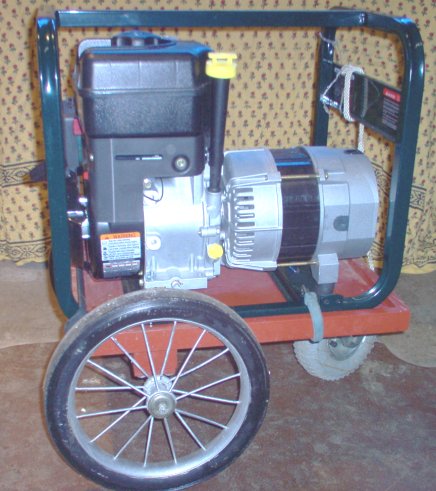
In every bathroom you find buckets and large jugs of water, ready for flushing when the water is turned off. Every cigarette lighter sold has the double function of being a flashlight. Many coffeeshops have gas generators on the street in front of them, ready to turn on every 2 hours so that the business can run without interruption.
Approximately half of the city's buildings house the offices of a huge number of International organizations. Everywhere you look, you see signs for aid organizations, diplomacy services and social programs. The population of Pristina is approximately 500,000 people, a relatively small city. The city is quite quiet since its primary source of employment consists of jobs related to the diplomatic re-building of the Kosovar state (office jobs) and there are few open or green spaces in the city center. Most gathering happens in cafes.
Many of the international offices housed in the larger buildings and many of their employees, live in certain parts of the city and have built-in generators and cisterns so that their power and water services are never interrupted. Smaller organizations, local businesses and private homes, especially those of local people either rely on small gas generators or simply live without services during the outages. When visiting my local friends, we frequently had to enter the house in the dark, move around with a flashlight and use a bucket of water to flush the toilet. Because of these conditions at home, we spent a lot of time in cafes who run their generators during the outages.
✖ Somewhat rhythmically...
Every 2 hours the electricity and water is cut off. The city momentarily falls dark and quiet as ventilation, music and machinery is shut down. A few seconds later, the common sounds of the city are overtaken progressively as hundreds of gas generators start up. For an hour, the whole city rumbles and those sitting at cafe terraces must yell to each other to be heard over the sounds of the engines. Pedestrians on the sidewalk must step around cables and the scent of burning petrol is everywhere. After about an hour the power returns and, also progressively, the generators shut down. In this moment one can find a second of great silence.
✖ So what I'm doing...
The whole sound scape of the city is changed cyclically. This is an investigation of soundscape as a direct translation of social conditions. The conditions established by the basic functionings (and malfunctionings) of the city infrastructure translate into clearly measurable sonic vacillations. A high quality, long duration recording (planned, 7 days) will be produced and a further work will be prepared from this material.
(thanks to David Drury for helping me be a bit more articulate here...)
✖ roughTIME TABLE
- November 16-December 1 : researching and testing equipment for city scape sound and video recording, designing outcome
- December 2-December 8th : arranging equipment for travel to Kosova
- December 28-January 10th : travel to Pristina to record sound cycles as well as interviews with local people on their relationship to the power situation
- January 12-Feb 1st : process recordings, design presentation/installation
✖ QUESTIONS ON APPROACH
- Using an ecological research and synthesizing approach to observing and presenting how processes/individuals/conditions are interrelated.
- What is the significance of electricity and water services for people living in this context?
- What meaning can be found in such patterns in daily life?
- What connections can be made from such life patterns?
- What other patterns can be observed?
- What is the difference between automated and manual pattern recording/ recognition?
- Moving towards generating sound from video (image/movement/colour recognition), with focused research on what patterns have relevance and making relevant combinations between the sound and images. Looking at how these images and sounds can function together/separately. [abstraction+noise]
- What is the significance and effect of this noise cycle?
- What is the effect of noise occurrence in general?
- What is the difference between intentionally generated patterns and 'accidentally' occurring pattern? (aside from the question of 'ir'regularity)
- How to make relationships between the patterns (and timing) for playback and presentation? (ie. cycle in Pristina of sound changes is very long, how could this be translated?)
- Looking for 'natural/patterns', using these patterns to generate further artwork
- How can the 'collection/presentation' of such an (irregular) pattern be useful as a metaphor for other processes/histories? (looking -> emotional/personal histories)
- How 'regular' are daily patterns? What is the meaning of regularity?
- Is it possible to derive an algorithm from this cycle?
- What is the relationship between time and such patterns?
✖ QUESTIONS FOR THE GROUP (others in the course, or you?)
- What can be the final outcome of this pattern collection? [composition based on the rhythm, composition from this sound, other visualization of this pattern data]
- How will presenting this as simply audio work alongside other noise pattern recordings
- How does this project relate to previous 'long compositions' and soundscape works? (such as Cage's silent performance)
- How to put together the images of the place (street, generators, condition of the city) along with the sound recordings? What does this mean in terms of contextualization? Since the city looks very extreme (mixture of fancy cafes and post-apocalyptic style broken buildings), what message with a visual image convey and what message is desirable?
- How does this work relate to recent works on the topic of "putting the viewer into a foreign context"? Would a live soundscape feed be desirable, beneficial to the project?
- Suggestions for technical tools?
- How important is "reality"?
- Should the sound be recorded with actual sound equipment (looking for the most real representation possible) or record it as data, using another tool and collecting numbers? (probably both, or record as sound first and then can translate to data later, as desired)
- What is the relationship between time and such irregular cycles? How would one record this and make this relation? How much static would need to be collected in order to make a summary/algorhythm out of it (something that could be used to generate further creative works?)
- Suggestions for readings about pattern? Pattern recognition?
✖ LINKS
complex systems for linking processes and visualising data : abstractions
- Chitty Chitty Bang Bang breakfast machine
- Pythagora Switch (chain reactions)
- John Kessler (NYC sculptor)
translating spaces
You Are Not Here – A tour of Gaza through the Streets of Tel-Aviv, By Mushon Zer Avi
Soundshelters - Artist: Samir Ayyad [Gaza], an interactive multi-channel sound space that connects people in Linz and in Gaza. The “real sound” in Linz was overlaid by sound travelling from Gaza to Linz and vice versa.
Subscribe to:
Posts (Atom)